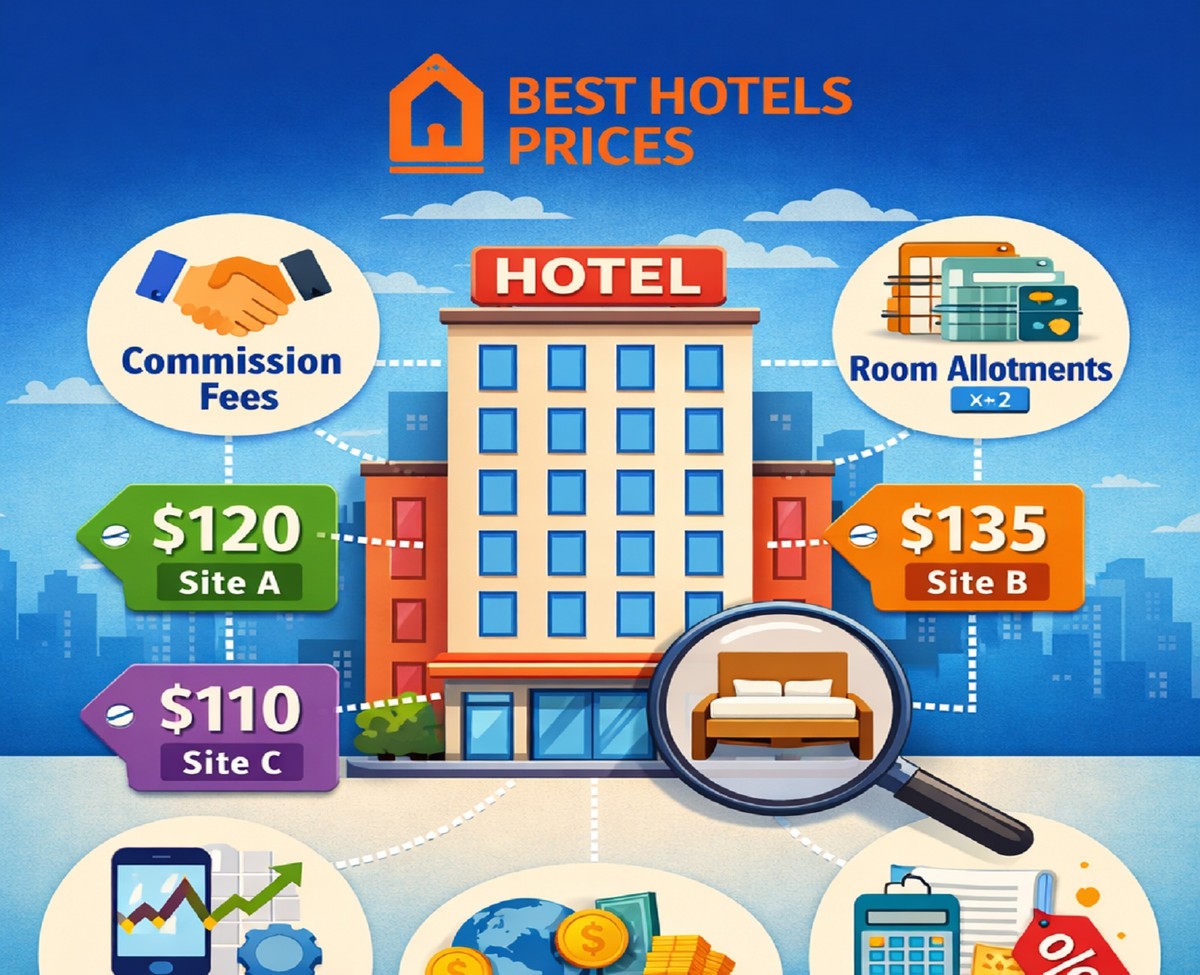
If you’ve ever searched for a hotel online, you may have noticed something confusing.
The same hotel.
The same room type.
The same dates.
Yet the price looks different across booking websites.
This raises an important question:
Why does the same hotel have different prices on different websites?
The answer lies in how the hotel industry structures inventory, commissions, pricing models, and distribution agreements. Understanding these factors helps travelers make more informed decisions and compare hotel prices more effectively.
Let’s break it down clearly.
1. Different Commission Structures
Online booking platforms operate under different commission agreements with hotels.
Some booking sites charge hotels higher commission fees. Others operate under lower-cost models. These commission differences directly affect how room prices are displayed.
For example:
- A platform charging a higher commission may increase the retail price to maintain margins.
- A platform with a lower commission agreement may display a slightly reduced rate.
This alone can create noticeable differences in hotel pricing between websites.
2. Pre-Purchased Room Allotments
Some travel platforms purchase room blocks in advance at negotiated wholesale rates. These rooms are then resold at varying price points.
If a website secured rooms at a lower contract rate months earlier, it may show a better price than a competitor relying on real-time inventory.
However, once that pre-purchased inventory sells out, the price may adjust to match market rates.
This is one reason hotel prices fluctuate across websites within hours.
3. Dynamic Pricing Systems
Hotels use dynamic pricing algorithms to adjust rates based on demand, availability, seasonality, and competitor behavior.
When demand increases, rates can change rapidly. But not all booking platforms update pricing simultaneously.
Some platforms refresh pricing feeds more frequently than others. This timing difference can temporarily create pricing gaps between websites.
So if one platform updates faster, it may display a higher or lower rate than another, even for the same room.
4. Tax and Fee Display Differences
Another common reason for pricing differences is how websites display taxes and additional charges.
Some booking sites:
- Show base price first, then add taxes later.
- Include taxes and fees upfront.
- Separate resort fees.
- Display service charges differently.
Two websites may show what appears to be different prices, but once taxes are calculated, the final payable amount may be closer than it seems.
Understanding whether you are comparing base rate or total rate is essential.
5. Currency Conversion Variations
If you are searching from outside the hotel’s local currency region, exchange rates can affect displayed pricing.
Booking websites use different currency conversion providers. Exchange rates fluctuate daily, and even small differences in conversion timing can change displayed totals.
This is especially noticeable for international travel bookings.
Must read: Why Hotel Prices Change Daily
6. Loyalty Programs and Member Pricing
Some booking platforms provide exclusive member pricing or app-only rates.
For example:
- Mobile app discounts
- Member-only deals
- Loyalty pricing
- First-time user offers
If you are logged into one platform but browsing anonymously on another, the displayed prices may differ.
This can create the perception of inconsistent pricing, even though the variation is tied to account-based benefits.
7. Geographic Pricing Differences
In some cases, pricing may vary based on geographic location.
This practice is less common with major global platforms, but pricing differences can occur due to:
- Local market demand
- Regional taxes
- Distribution partnerships
Your IP location may influence currency display or promotional eligibility.
Must Read: Do Hotel Prices Increase If You Search Multiple Times?
8. Cancellation Policy Differences
Not all room rates are identical in terms of flexibility.
A cheaper listing may:
- Be non-refundable
- Have stricter cancellation policies
- Require full upfront payment
Meanwhile, a slightly higher price may include flexible cancellation.
If two websites show different rates, always compare cancellation terms before assuming one is “cheaper.”
9. Payment Timing Models
Some booking websites use different payment structures:
- Pay at property
- Prepaid online
- Installment-based
- Partial deposit
These models can influence how pricing is displayed.
Prepaid rates are often slightly lower than fully flexible “pay later” options.
10. Promotional Agreements
Hotels frequently run time-sensitive promotions on specific platforms.
A hotel may partner with one website for:
- Seasonal promotions
- Targeted marketing campaigns
- Limited inventory offers
These agreements can temporarily create exclusive pricing differences.
Once the promotion ends, pricing may equalize.
How to Compare Hotel Prices Properly
Now that you understand why prices differ, the next step is knowing how to compare effectively.
1. Compare Total Cost, Not Base Price
Always calculate the final payable amount including taxes and service charges.
2. Check Cancellation Terms
Ensure you are comparing similar refund conditions.
3. Confirm Room Type
Make sure the room category is identical across websites.
4. Verify Payment Terms
Understand whether payment is required upfront or at check-in.
5. Use a Hotel Comparison Platform
Instead of manually checking multiple websites, comparison platforms aggregate pricing from different booking providers into one view. This makes discrepancies easier to analyze.
Why Pricing Transparency Matters
Hotel pricing can feel inconsistent, but the differences usually result from structural and contractual factors rather than manipulation.
When travelers understand:
- Commission models
- Inventory structures
- Dynamic pricing
- Tax inclusion
- Policy differences
The booking process becomes clearer and more strategic.
Transparency builds trust both for travelers and comparison platforms.
Important Information, Must Help you: Best Time to Book a Hotel
Final Thoughts
Seeing different prices for the same hotel across multiple websites can be confusing, but the variations are typically driven by structural and operational factors rather than manipulation.
Commission agreements, room allotments, dynamic pricing systems, tax presentation, cancellation flexibility, and promotional partnerships all influence how rates are displayed across booking platforms. What appears inconsistent at first glance is usually the result of distribution models and real-time demand adjustments.
Understanding these mechanisms allows travelers to make smarter, more confident decisions. Instead of focusing only on the lowest visible price, it is essential to compare total costs, cancellation policies, payment terms, and room conditions before booking.
Must Read: How AI Predicts Hotel Price Changes
In today’s digital travel environment, clarity and transparency matter more than ever. Comparing hotel rates thoughtfully across multiple providers ensures that pricing differences are evaluated accurately and strategically.
For travelers seeking a clearer view of available hotel options and pricing variations across booking platforms, BestHotelsPrices provides a centralized comparison experience designed to support informed booking decisions.