What Defines Genuine Sustainable Luxury Travel?
Before booking your next high-end sustainable travel experience, it is critical to understand the difference between authentic eco-tourism and "greenwashing." A hotel simply asking you to reuse your bathroom towels does not qualify as an eco-resort. Genuine sustainable luxury is built on four non-negotiable pillars.
1. Carbon Neutral Luxury Travel Experiences and Renewable Energy
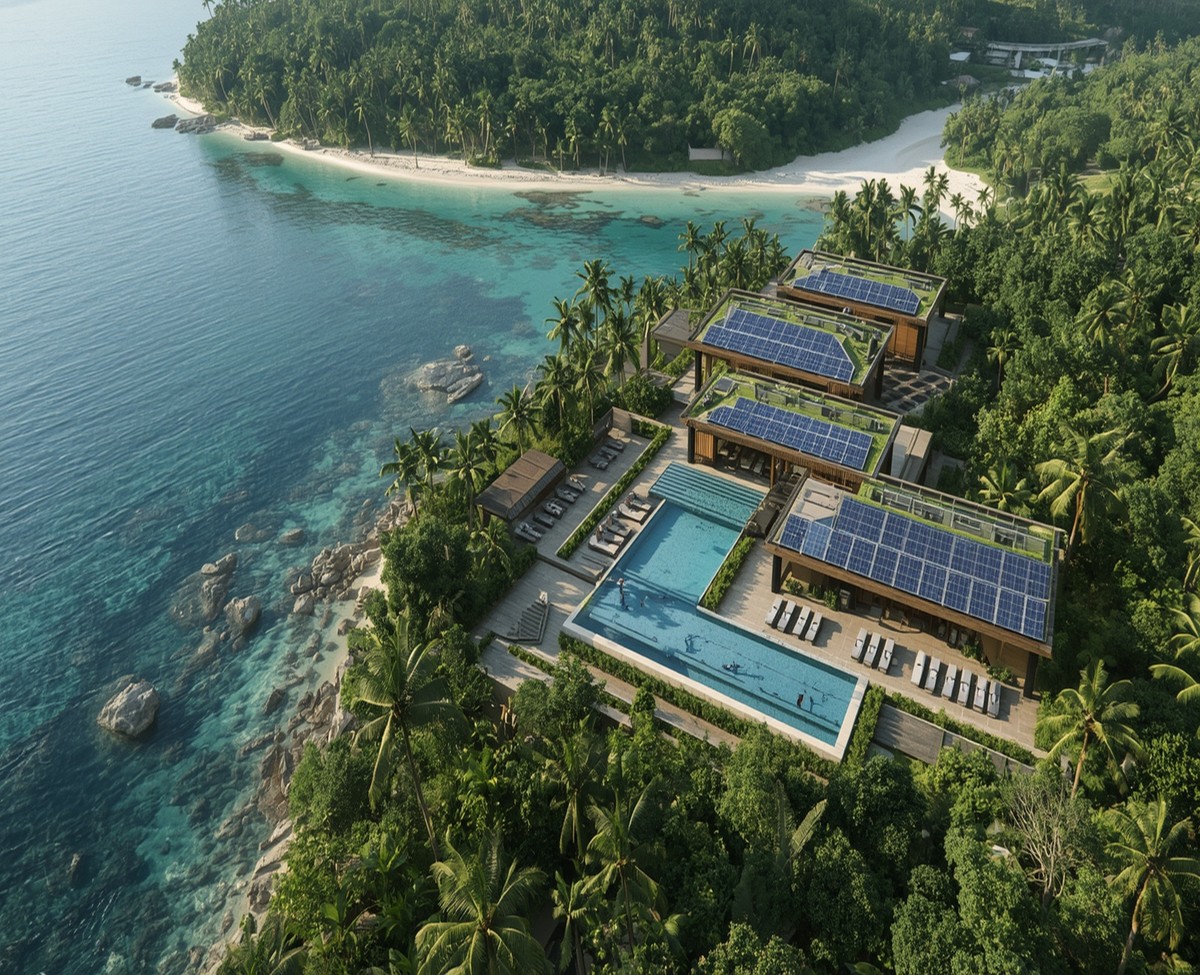
The best zero-waste luxury hotels and resorts do not rely on local, fossil-fuel-heavy power grids. Instead, they invest heavily in renewable energy infrastructure. This includes massive, hidden solar arrays, wind turbines, and innovative architectural designs that utilize natural cross-breezes and deep-water cooling systems to eliminate the need for high-emission air conditioning. Furthermore, top-tier resorts actively measure, reduce, and offset their Scope 1, 2, and 3 carbon emissions to offer truly carbon-neutral luxury travel experiences.
2. Hyper-Local Sourcing and Zero-Waste Culinary Programs
Fine dining in the luxury sector is no longer about flying in out-of-season caviar from halfway across the world. The ultimate luxury is eating ingredients harvested that very morning from the resort’s private organic farm. Zero-waste luxury hotels and resorts operate on a "zero kilometer" philosophy. Whatever they cannot grow on-site is ethically sourced from neighboring farms, empowering the local agricultural economy. Food waste is strictly managed through advanced composting and on-site biodigesters, turning kitchen scraps into nutrient-rich soil or biogas.
3. Biodiversity Conservation and Active Habitat Regeneration
Sustainable luxury travel destinations for couples and families go beyond "doing no harm"—they actively heal the environment. Many of the most exclusive resorts in the world are situated within vast, privately managed nature reserves. A significant portion of your nightly room rate goes directly toward funding teams of marine biologists, wildlife wardens, and reforestation experts who protect endangered species and rebuild fragile ecosystems like coral reefs and rainforests.
4. Community Integration, Fair Wages, and Cultural Respect
Sustainability is fundamentally about people. Ethical luxury resorts prioritize the hiring, training, and upward mobility of local community members. They do not just offer entry-level positions; locals are trained as master guides, sommeliers, and resort managers. By investing in local healthcare, education, and infrastructure, these resorts ensure that the surrounding indigenous populations thrive as a direct result of tourism.
How to Plan a Sustainable Luxury Vacation Without Compromising on Comfort
Transitioning your travel habits to align with eco-conscious values does not mean you have to sleep in a tent or forgo exceptional service. Here is a step-by-step guide on how to plan a high-end sustainable travel itinerary.
Step 1: Look for Rigorous Third-Party Green Certifications
When searching for the best eco-friendly luxury resorts in 2026, look for properties that have subjected themselves to strict, independent environmental audits. Certifications from organizations like EarthCheck, LEED (Leadership in Energy and Environmental Design), the Global Sustainable Tourism Council (GSTC), and B Corp are reliable indicators that a resort's sustainability claims are scientifically backed and continuously monitored.
Step 2: Embrace the "Slow Travel" Philosophy
The aviation industry is one of the largest contributors to global carbon emissions. To mitigate the environmental impact of your transit, adopt a "slow travel" approach. Instead of taking three separate, short-haul weekend trips throughout the year, consolidate your travel into one extended, immersive vacation. Spend two to three weeks deeply exploring a single region. Once you arrive at your destination, opt for overland travel—such as luxury electric trains or EV private transfers—rather than taking domestic hopper flights.
Step 3: Ask the Right Questions Before Booking
Take an active role in vetting your accommodations. Before finalizing a reservation, contact the resort's concierge and ask highly specific questions regarding their sustainability practices:
- What percentage of your staff is hired directly from the surrounding local community?
- Do you have a dedicated conservation fund, and how is it financed?
- How do you manage single-use plastics and overall waste on the property?
- What portion of your energy is derived from renewable sources?
An authentic eco-resort will have these answers readily available and will be enthusiastic to share their initiatives with you.
Step 4: Offset the Unavoidable Emissions
While flying is often unavoidable for international travel, you can neutralize its impact by purchasing high-quality carbon offsets. Do not simply check the $5 offset box offered by the airline at checkout. Instead, use independent calculators to determine the exact carbon footprint of your flight, and purchase offsets from verified organizations like Gold Standard or Cool Effect. Ensure your funds are going toward measurable, high-impact projects like renewable energy development or direct-air-capture technology.
Top Eco-Friendly Luxury Resorts in 2026 and Their Pricing
To help you execute the perfect eco-conscious getaway, we have curated a list of the world's premier sustainable luxury properties. Below, we explore what makes them environmental pioneers and provide detailed insights into luxury eco-tourism prices and packages.
1. Soneva Fushi (Baa Atoll, The Maldives)
The Experience: Barefoot, castaway luxury in a UNESCO Biosphere Reserve.
Soneva is widely considered the pioneer of sustainable luxury. Soneva Fushi proves that you can enjoy private waterslides, Michelin-starred dining, and personal 24/7 butler service without degrading the fragile marine ecosystem of the Maldives.
Why It Ranks Among the Best Zero-Waste Luxury Hotels and Resorts:
Eco-Centro Waste-to-Wealth: Soneva recycles or composts an astonishing 90% of its solid waste. Their on-site "Makers' Place" facility upcycles discarded aluminum and plastic into stunning art pieces and building materials.
Massive Coral Restoration: The resort operates one of the largest coral propagation programs globally, utilizing mineral accretion technology to rebuild reefs devastated by oceanic warming.
The 2% Environmental Levy: Soneva adds a mandatory 2% environmental fee to all stays. This directly funds the Soneva Foundation, which has planted half a million trees, funded renewable energy projects, and provided clean drinking water to hundreds of thousands of people worldwide.
Cost of Staying at a Luxury Eco-Resort (Soneva Fushi 2026 Pricing):
- One-Bedroom Crusoe Villas: $2,800 - $4,200 USD per night.
- Multi-Bedroom Private Water Reserves: $8,500 - $15,000+ USD per night.
(Prices peak during the December-January holiday season and are most favorable during the May-September monsoon season).
2. Mashpi Lodge (Chocó Cloud Forest, Ecuador)
The Experience: A futuristic, glass-walled observation deck hidden deep within a prehistoric Andean cloud forest.
Mashpi Lodge is a masterclass in low-impact architectural design. Built directly into a 7,000-acre private reserve (which the founders purchased specifically to save it from logging), the lodge was pre-assembled off-site to ensure no heavy machinery damaged the ancient trees during construction.
Why It Offers Premium Carbon Neutral Luxury Travel Experiences:
100% Carbon Neutral: Thanks to the immense biomass of their protected 2,500-hectare reserve acting as a massive carbon sink, Mashpi has been entirely carbon neutral for nearly a decade.
In-House Scientific Research: Your stay directly funds the lodge's full-time Science Department. Guests can accompany resident parabiologists as they discover new species of orchids, tree frogs, and endemic birds.
Community Empowerment: Over 75% of the lodge's staff are local residents who receive ongoing training, ensuring the community benefits directly from preserving the forest rather than cutting it down.
Luxury Eco-Tourism Prices and Packages (Mashpi Lodge 2026):
Mashpi operates on an all-inclusive expedition model (covering luxury accommodation, gourmet dining, and daily guided excursions).
- Wayra Rooms: $1,400 - $1,600 USD per night.
- Yaku Suites: $1,800 - $2,100 USD per night.
3. Singita Lebombo Lodge (Kruger National Park, South Africa)
The Experience: Avant-garde safari luxury suspended above the N’wanetsi River.
Singita is a conservation brand that happens to operate some of the most exclusive safari lodges in Africa. Their 100-year purpose is to preserve and protect large tracts of African wilderness for future generations.
Why It Is a Leader in High-End Sustainable Travel:
Anti-Poaching Operations: Singita heavily funds highly trained, specialized anti-poaching canine units that patrol their vast concessions, resulting in a dramatic decrease in rhino and elephant poaching.
Solar Integration: Lebombo runs on an extensive, state-of-the-art Tesla solar power system, significantly reducing the reliance on diesel generators typical of remote safari lodges.
Singita Community Culinary School: The lodge operates a world-class culinary school for local youth, training them to become professional chefs and offering them guaranteed employment within the luxury hospitality sector upon graduation.
Cost of Staying at a Luxury Eco-Resort (Singita Lebombo 2026):
Standard Suites: $2,500 - $3,200 USD per person, per night (All-inclusive of luxury accommodation, twice-daily game drives, premium dining, and conservation levies).
4. 1 Hotel Hanalei Bay (Kauai, Hawaii)
The Experience: A flagship wellness and sustainability sanctuary on one of the world's most beautiful coastlines.
1 Hotels has built its entire brand around biophilic design and environmental stewardship. The Hanalei Bay property is a breathtaking example of adaptive reuse—rather than tearing down the old St. Regis and sending thousands of tons of concrete to a landfill, they stripped it to its bones and rebuilt it using reclaimed, natural materials.
Why It Is a Top Sustainable Luxury Travel Destination for Couples:
LEED Certification & Adaptive Reuse: The property is aiming for LEEDv4 certification, utilizing rainwater harvesting systems, extensive native landscaping, and energy-efficient climate control.
Zero Single-Use Plastic: The resort is entirely free of single-use plastics, utilizing reclaimed wooden room keys, filtered water taps in every room, and bulk luxury bath amenities.
Regenerative Guest Experiences: Guests can participate in daily coastal cleanups, invasive species removal hikes, and native tree-planting ceremonies, allowing couples to bond over meaningful conservation work.
Luxury Eco-Tourism Prices and Packages (1 Hotel Hanalei Bay 2026):
- Mountain View Rooms: $1,100 - $1,400 USD per night.
- Ocean View Suites: $2,200 - $3,500 USD per night.
5. Six Senses Yao Noi (Phang Nga Bay, Thailand)
The Experience: A secluded island retreat offering unparalleled views of dramatic limestone karsts.
Six Senses Yao Noi seamlessly blends traditional Thai architecture with cutting-edge sustainable technology, providing a deeply holistic approach to both personal wellness and environmental health.
Why It Excels in Eco-Friendly Luxury:
Farm on the Hill: The resort features a massive organic farm and free-range chicken estate, supplying the Michelin-quality kitchens with zero-kilometer ingredients.
Hornbill Conservation: The resort has created a dedicated sanctuary for the Oriental Pied Hornbill, helping to bring the local population back from the brink of localized extinction.
Earth Lab: Guests can visit the interactive Earth Lab to learn about the resort's sustainability metrics, from glass upcycling and water purification to the creation of organic, chemical-free cleaning supplies.
Cost of Staying at a Luxury Eco-Resort (Six Senses Yao Noi 2026):
- Hideaway Pool Villas: $950 - $1,200 USD per night.
- Ocean Panorama Pool Villas: $1,500 - $2,000 USD per night.
Understanding the Cost of Staying at a Luxury Eco-Resort
When researching luxury eco-tourism prices and packages, travelers often wonder why sustainable resorts command such premium rates. Shouldn't using less electricity and growing your own food make the stay cheaper?
The reality of the high-end sustainable travel guide is that true environmental stewardship is incredibly capital-intensive. When you pay $2,000 a night at a property like Singita or Soneva, you are not merely paying for a plunge pool and high-thread-count linens. You are funding a complex, off-grid, self-sustaining micro-city.
Your room rate pays the salaries of local community members, indigenous trackers, and marine biologists. It funds the installation and maintenance of massive solar arrays, reverse-osmosis water purification plants, and advanced biodigesters. Most importantly, it often funds the lease or purchase of the very land the resort sits on, protecting thousands of acres of pristine wilderness from being sold to logging, mining, or commercial agriculture corporations.
In traditional luxury, your premium pays for excessive consumption and corporate profit margins. In sustainable luxury, your money functions as a vital conservation grant that happens to come with the vacation of a lifetime attached.